An office clean-out goes fastest when you sort before you haul. Decide what the company keeps, get the usable pieces to someone who wants them, set aside the few things that need special handling, and leave one load for the crew on the last day. Below is the checklist we'd hand any office manager around Hampton, McDonough, Jonesboro, Fayetteville or south Fulton, whether the lease is ending, two suites are becoming one, or the business is closing for good.
Step 1: Walk every room and take photos
Start with the obvious rooms, then go looking for the forgotten ones: the server closet, the supply room, the break room, the space under the reception desk, the storage cage in the parking garage. Take wide photos of each.
Those photos do two jobs. They become your keep list for the movers, and they're how you get a price from us. Text them to (678) 732-7980. If what's there on the day matches the photos, that's your price.
Step 2: Mark what the company keeps
Put a colored sticker or tape on every piece that moves to the new space or goes home with a partner. Anything without a mark is fair game. This one step prevents the worst clean-out mistake: hauling the good chair everybody fought over.
Step 3: Donate what still works, and check before you load it
Goodwill of North Georgia accepts furniture, lamps, small appliances and rugs. Its list of things it can't take matters more for offices, though: items in need of repair and anything water-soaked or stained are turned away, along with air conditioners and wall cabinets. A desk with a broken drawer track or a chair with a torn seat won't make it through the donation door.
For larger lots of desks and chairs, our post on what to do with old office furniture walks through the ReStore and drop-off options near you.
Step 4: Pull out electronics, and treat old monitors carefully
Electronics are where offices get stuck. Two facts help:
- Goodwill takes computers in any condition through its Dell Reconnect partnership: desktops, laptops, monitors, printers, speakers, cell phones and cables.
- Old tube monitors are the problem pieces. Georgia's Department of Public Health notes that cathode ray tube TVs and monitors carry the highest lead content of any electronics.
Wipe or pull the hard drives before anything with company data leaves the building. Once that's done, we haul the rest, including printers, desk phones and the box of dead keyboards. More on that in electronics removal.
Step 5: Collect the batteries separately
Every office has a drawer of them: laptop batteries, power banks, phones nobody uses. The EPA says lithium-ion batteries and devices that hold them don't belong in the trash or a recycling bin, because they can be crushed and start fires. Its advice is to tape the terminals or bag each battery on its own, then take them to a battery recycler or a household hazardous waste collection.
Step 6: Shred, then recycle the paper
Anything with client or employee details goes through a shredder first. After that, paper is easy. The Henry County Recycle Center at 65 West Asbury Road in McDonough accepts office paper, newspaper, magazines and cardboard, with flattened boxes going to the baler under the green shelter near the yard debris area. It's open Tuesday through Saturday, 8 AM to 4 PM. It doesn't take trash, and it doesn't pay for recyclables.
Step 7: Empty the break room
The fridge, microwave and coffee setup can all go with us. Food can't, so clean out the fridge the day before. Pull the cleaning sprays and other chemicals from under the sink; they stay behind.
Step 8: Book the final haul
Hauling an office yourself sounds cheaper until you see the rates. At the Fayette County Transfer Station, every commercial customer pays the scale rate of $48 a ton plus fees, with a one-ton minimum, so even a small business load pays for a full ton.
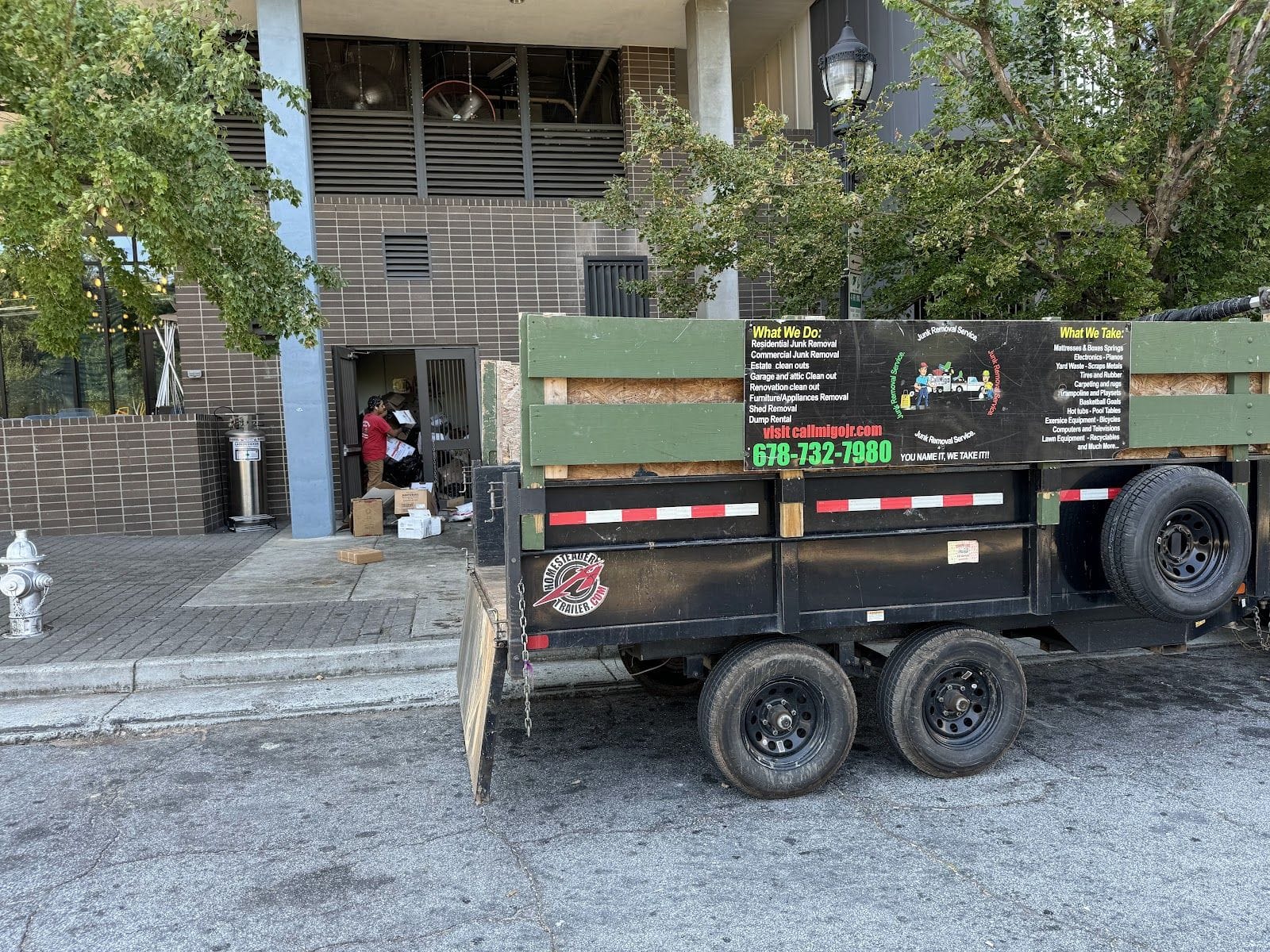
With us, the job starts at $150 and runs to $692 for a full 15-yard load, priced from your photos. If the building wants a certificate of insurance before a crew comes in, we send one on request, along with a W-9, and invoicing is available. We're open 24 hours, 7 days, same-day service is available, and you can call, text or WhatsApp in English or Spanish. See how commercial junk removal works, or the page for offices.
Step 9: Sweep and document
When the last load is out, the space gets swept, and you get photos of the empty rooms. Those go to your landlord or property manager with the keys.
Ready to clear it out? Just CallMigo.
Updated November 20, 2026